
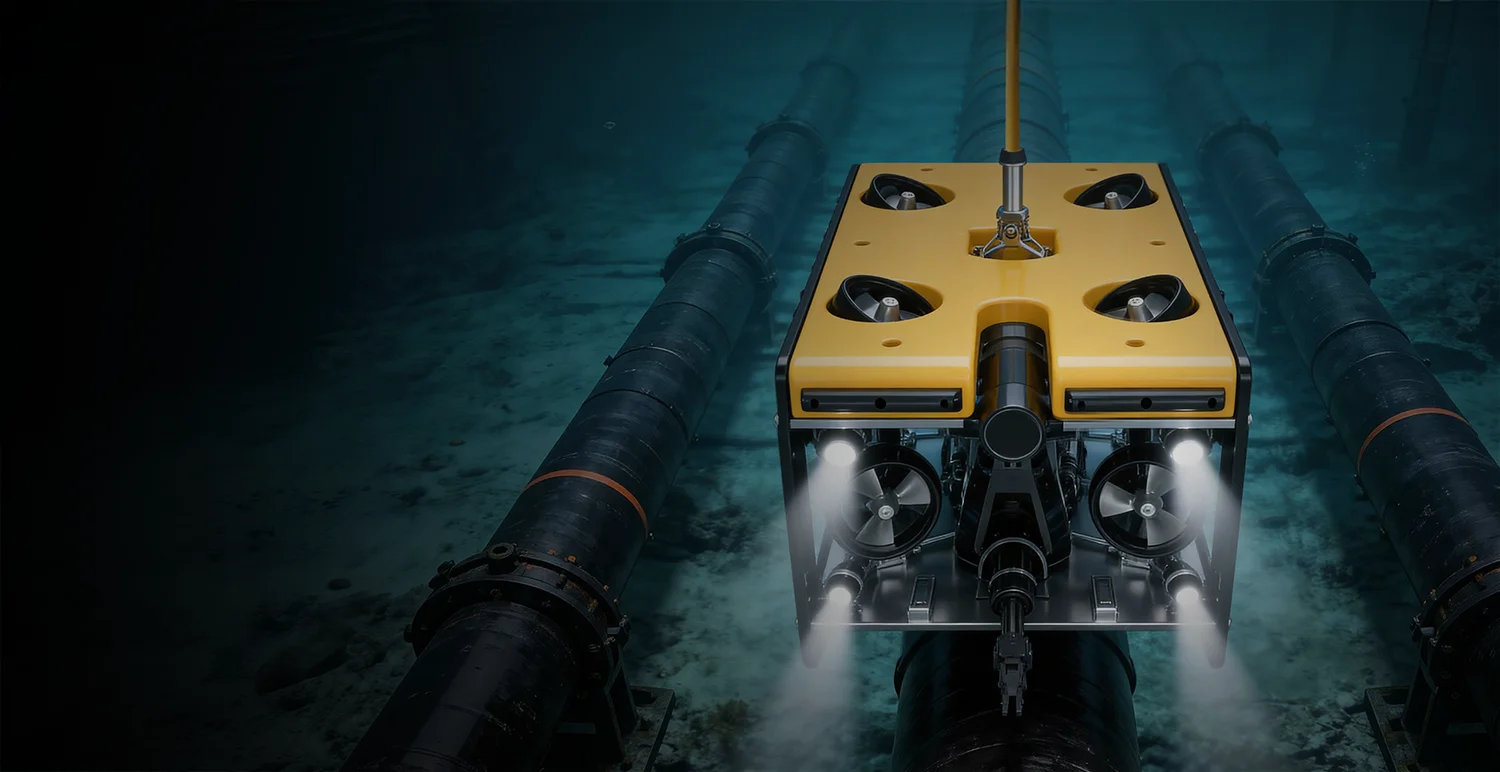
Subsea pipelines are critical components of offshore oil and gas transportation systems. They connect offshore platforms, subsea production facilities, and onshore processing infrastructure. Once installed, these pipelines must be protected against external impacts, seabed movement, fishing activities, and other potential hazards.
Burial is one method used to provide additional protection. By placing a pipeline beneath the seabed, operators can reduce its exposure to certain external risks and improve the stability of the installation.
However, subsea pipeline burial involves more than selecting a trenching machine. The method must match the seabed geology, pipeline dimensions, water depth, and project engineering requirements.
Understanding the main burial methods helps offshore contractors choose appropriate equipment and plan more efficient subsea operations.
Why Subsea Pipelines Need Burial Protection
Pipelines installed directly on the seabed may be exposed to several environmental and operational risks.
Fishing equipment can interact with exposed pipeline sections. Ship anchors may damage infrastructure in areas with significant marine traffic. Seabed erosion and sediment movement can also change the level of pipeline exposure over time.
Burial provides a physical layer of protection by placing the pipeline beneath the seabed surface.
The required burial depth is determined by project-specific engineering assessments. Factors may include:
- Pipeline diameter and wall thickness
- Seabed soil characteristics
- Water depth and current conditions
- Fishing and anchoring risks
- Pipeline operating requirements
- Local standards and project specifications
Not every pipeline requires the same burial arrangement. Some projects may use partial burial, while others require deeper trenching or additional protection measures.
1. Jetting-Based Pipeline Burial
Jetting is a trenching method that uses pressurized water to loosen or fluidize seabed sediments.
A jetting system directs water toward the seabed through specially designed nozzles. The resulting flow disturbs the surrounding soil, allowing the pipeline to settle into the loosened material or be positioned within the trench.
How Jetting Works
The jetting equipment is positioned along the pipeline route. Water is pumped through the system at a selected pressure and flow rate.
As the water enters the seabed, it loosens sediment around the pipeline. The equipment then advances along the route while the pipeline is buried.
Advantages of Jetting
Jetting can be effective in suitable soft-soil conditions, including certain sand and silt environments.
Its potential advantages include reduced direct mechanical contact with the pipeline, flexible equipment configurations, and suitability for certain continuous burial operations.
Limitations of Jetting
Jetting performance depends heavily on soil properties. Highly compacted sediments, cohesive clay, and harder seabed materials may be difficult to fluidize.
The method also requires careful control of water pressure and flow. Excessive disturbance may affect the surrounding seabed and should be considered during project planning.
2. Mechanical Pipeline Trenching
Mechanical trenching uses cutting tools to excavate the seabed directly. Common configurations include chain trenchers and wheel-based trenching systems.
These machines are designed to overcome soil resistance through mechanical cutting rather than relying exclusively on water flow.
How Mechanical Trenching Works
A mechanical trencher moves along the pipeline route while its cutting mechanism removes seabed material.
Depending on the machine design, the excavated sediment may be discharged behind the vehicle or transported through an integrated removal system.
The trench dimensions are determined by the cutting system, vehicle configuration, and seabed conditions.
Advantages of Mechanical Trenching
Mechanical trenching can be suitable for compacted sediments and certain harder seabed formations where jetting alone may be insufficient.
It also provides a more direct excavation process, making it possible to control trench width and depth according to the machine’s capabilities.
Operational Considerations
Mechanical trenchers require sufficient cutting power and traction. Soil resistance, vehicle stability, and excavation speed all influence performance.
The equipment must also maintain an appropriate distance from the pipeline to avoid unwanted mechanical contact.
3. Towed Pipeline Burial Plows
A subsea burial plow is generally towed by a support vessel. As the plow moves across the seabed, its share penetrates the soil and creates a trench.
This method can be considered for projects where the seabed conditions and vessel configuration are suitable for towing operations.
How a Burial Plow Works
The vessel provides the towing force needed to move the plow along the route.
The plowshare penetrates the seabed and creates a trench. The pipeline or cable is then positioned within the excavated path according to the installation arrangement.
Some plow systems are designed for simultaneous installation and burial, while others may be used in a separate burial operation.
Advantages and Limitations
A towed plow can offer a relatively straightforward operating arrangement when the vessel has sufficient towing capability and the seabed is suitable.
However, performance depends on towing force, soil resistance, water depth, route conditions, and the plow’s design.
It may be less suitable for locations where seabed topography or soil strength changes significantly over short distances.
Comparing the Three Burial Methods
| Factor | Jetting | Mechanical Trenching | Towed Plow |
| Main mechanism | Water-based soil fluidization | Mechanical cutting | Towed plowshare |
| Suitable conditions | Suitable soft sediments | Compacted and certain harder soils | Suitable seabed conditions for towing |
| Power requirement | Pump pressure and flow | Mechanical cutting power | Vessel towing force |
| Pipeline interaction | Depends on system arrangement | Requires careful clearance control | Depends on installation configuration |
| Mobility | ROV or dedicated vehicle | Usually self-propelled or tracked | Vessel-towed |
| Key consideration | Soil fluidization performance | Cutting capacity and traction | Towing capability and route conditions |
No single method is suitable for every subsea pipeline project. The final choice should be based on geotechnical survey data, pipeline design, installation sequence, and the required protection level.
Important Equipment Selection Factors
Choosing the right subsea pipeline burial equipment requires a detailed understanding of the project.
Seabed Geology
Soil composition determines how easily the seabed can be excavated. Sand, silt, clay, gravel, and weathered rock present different levels of resistance.
A geotechnical survey should be completed before finalizing the trenching method.
Trench Dimensions
The required trench width and depth must be compatible with the pipeline dimensions and project requirements.
Equipment selection should consider achievable working dimensions under actual seabed conditions rather than relying only on maximum rated specifications.
Operating Water Depth
The machine, hydraulic system, sensors, and connected equipment must be suitable for the planned operating depth.
For deeper projects, the complete system configuration should be reviewed to ensure compatibility.
Vehicle Mobility and Stability
Tracked vehicles may be suitable for certain seabed environments where stable contact and controlled movement are required.
Towed systems depend on vessel performance and the ability to maintain a consistent route.
Monitoring and Control
Cameras, sonar, depth sensors, and positioning systems help operators monitor equipment movement and excavation progress.
Reliable monitoring is particularly important when working near existing pipelines or other subsea infrastructure.
VVLAI Subsea Trenching Equipment
VVLAI develops subsea trenching systems for cable and pipeline burial applications.
Its equipment portfolio includes mechanical trenching ROVs, jetting-based systems, and towed trenching equipment.
The VKG1100 chain trenching ROV is designed for demanding subsea excavation operations, with a maximum trenching depth of 3 m and a rated working depth of 1,000 msw.
The VYL series provides additional configurations for subsea trenching and cable burial tasks, while the VCP60 towed trenching plow offers a vessel-towed solution for suitable seabed conditions.
The appropriate system depends on the project depth, soil properties, trench dimensions, pipeline or cable specifications, and installation method.
Conclusion
Subsea pipeline burial is an important part of offshore infrastructure protection. Jetting, mechanical trenching, and towed plowing each offer different operating principles and performance characteristics.
Selecting the right method requires a clear understanding of seabed conditions, pipeline requirements, and available offshore resources.
With suitable equipment and proper engineering preparation, contractors can improve burial efficiency and support the long-term protection of subsea pipelines.
