
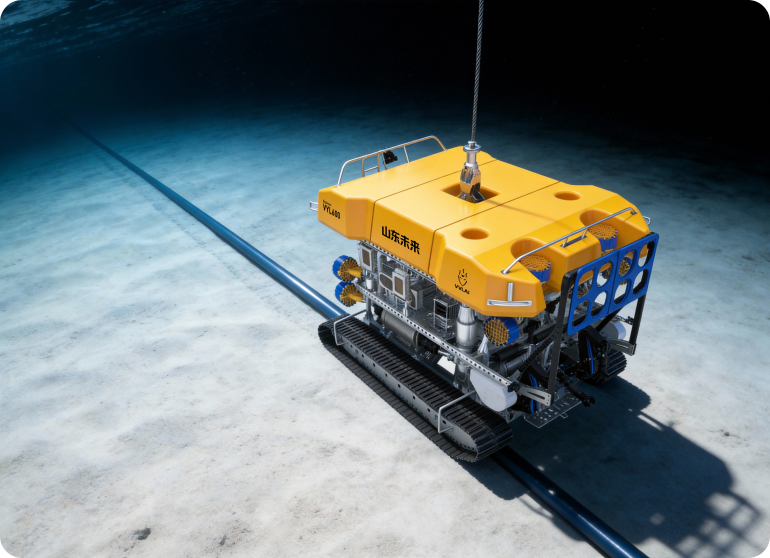
Subsea cables are essential to modern offshore infrastructure. They carry electricity from offshore wind farms to shore, connect individual turbines within a wind farm, and support international telecommunications networks. As these systems expand into deeper waters and more challenging seabed environments, protecting cables after installation has become an increasingly important engineering task.
Subsea cable burial is one of the most widely used methods for protecting submarine cables from external damage. However, successful burial requires more than simply placing a cable beneath the seabed. Engineers must consider soil conditions, burial depth, cable properties, installation methods, and long-term maintenance requirements.
Understanding these factors helps offshore developers and contractors select the right cable burial equipment and reduce the risk of costly subsea failures.
Why Subsea Cable Burial Matters
Submarine cables operate in environments where several external forces can threaten their integrity. Anchors, fishing gear, seabed movement, and other marine activities can damage cables that are exposed or insufficiently protected.
Cable burial creates a protective layer of seabed material above the cable, reducing its exposure to external hazards. The required burial depth depends on project specifications, seabed conditions, water depth, and the level of external risk.
For offshore wind projects, cable protection is particularly important because array and export cables connect valuable energy infrastructure. Damage to a single cable can interrupt power transmission and require a specialized repair vessel, subsea intervention equipment, and extended offshore operations.
Telecommunications cables face similar challenges. Although their installation requirements may differ from those of power cables, maintaining cable integrity remains essential for network reliability.
Burial is not the only available protection method. Rock placement, concrete mattresses, and other protective systems may be used where burial is impractical. The appropriate solution depends on the specific project environment.
Common Subsea Cable Burial Methods
Different burial methods are suited to different seabed conditions and project requirements.
1. Jetting
Jetting systems use high-pressure water to loosen seabed sediment and create a trench into which a cable can be placed or lowered.
This method is generally effective in suitable sandy and unconsolidated soils. It can achieve efficient trenching while minimizing direct mechanical contact with the cable.
However, performance depends heavily on sediment characteristics. Dense clay, compacted layers, and cohesive soils may require different jetting configurations or additional excavation methods.
2. Mechanical Trenching
Mechanical trenchers use cutting chains, excavating tools, or other mechanical systems to remove seabed material.
They are useful when the ground is too compact for conventional jetting alone. Cutting performance, tool configuration, and machine traction must be matched to the expected soil strength.
Mechanical trenchers can provide controlled trench geometry, but their effectiveness depends on the equipment’s power, cutting capability, and ability to maintain stable movement across the seabed.
3. Towed Trenching Plows
A towed trenching plow uses the pulling force of a surface vessel to move through the seabed. Depending on its configuration, the plow can create a trench while the cable is laid during the same operation.
This integrated approach can reduce the need for separate trenching and cable-laying passes. It is particularly attractive for suitable long-distance projects where the seabed conditions allow consistent towing.
The cable diameter, required burial depth, towing load, and seabed strength must all be considered before selecting this method.
4. Post-Lay Burial
In some projects, the cable is laid on the seabed first and buried afterward. A dedicated subsea trencher or trenching blower then creates the required protective cover.
Post-lay burial offers flexibility when cable installation and protection need to be performed as separate operations. It also allows contractors to inspect the laid cable route before beginning burial work.
The choice between simultaneous burial and post-lay burial depends on installation strategy, equipment availability, route conditions, and project scheduling.
How Seabed Conditions Affect Equipment Selection
Seabed geology is one of the most important factors in cable burial planning.
Loose sand can often be excavated efficiently using jetting. Soft silt may require careful control of water flow to avoid excessive sediment disturbance. Cohesive clay may resist hydraulic excavation and require more powerful or specialized tools.
Weathered rock and other hard formations introduce additional challenges. Mechanical cutting, specialized trenching tools, or alternative protection methods may be necessary.
Before equipment selection, engineers should evaluate:
- Soil composition and strength along the cable route
- Expected trench width and burial depth
- Changes in seabed elevation and slopes
- Water depth and current conditions
- Cable diameter and minimum bending radius
- Required installation speed and operational tolerances
A route containing multiple soil types may require a flexible equipment configuration. Selecting a machine based only on the easiest section of the route can create operational problems when ground conditions change.
Key Equipment for Subsea Cable Burial
Modern cable burial projects use several categories of specialized equipment.
Subsea trenchers are designed to excavate the seabed and create a protective trench. Depending on the model, they may use mechanical cutting, hydraulic jetting, or a combination of methods.
Trenching blowers use high-pressure water jets to loosen seabed material. They are particularly useful for selected post-lay burial and pipeline reburial applications.
Towed trenching plows offer an alternative for projects where cable installation and trenching can be combined into a single operation.
ROVs provide visual inspection, positioning support, and operational monitoring. They can help operators assess trench progress, verify cable routing, and identify exposed sections that require further attention.
The most effective equipment configuration is the one that matches the seabed conditions and installation objectives, rather than simply the one with the highest power rating.
Monitoring Burial Quality During Installation
Achieving the required burial depth is only part of the task. Contractors must also verify that the cable follows the planned route and remains within project tolerances.
Underwater cameras, sonar, altimeters, and navigation systems can provide information about the trenching process and surrounding seabed. Positioning data helps operators compare actual equipment movement with the planned route.
Important monitoring considerations include trench depth, trench continuity, cable position, burial consistency, and potential areas of seabed instability.
If the equipment encounters unexpected resistance or loses stable movement, operators may need to adjust its speed, tool configuration, or operating parameters.
Documentation is equally important. Inspection records and installation data help demonstrate compliance with project requirements and provide a useful baseline for future maintenance.
Challenges in Long-Distance Cable Burial
Long-distance projects introduce logistical and operational challenges beyond the trenching process itself.
Equipment must maintain consistent performance over extended routes, sometimes across changing seabed conditions. Vessel schedules, weather windows, cable handling requirements, and equipment recovery operations can all affect productivity.
Contractors must also consider how equipment downtime will influence the overall installation schedule. A system that performs well in one soil type but struggles in another may require frequent operational changes or additional equipment mobilization.
For this reason, project planning should include realistic performance estimates, contingency arrangements, and a clear procedure for dealing with difficult ground conditions.
Choosing a Subsea Cable Burial Solution
Selecting the right solution requires balancing technical performance, project risk, and operating cost.
Before procurement, developers and contractors should confirm the required working depth, trenching depth, trench width, compatible cable dimensions, propulsion capability, and sensor configuration. They should also assess whether the system can accommodate the expected range of seabed conditions.
Customization may be necessary for projects with unusual cable dimensions, challenging terrain, or specialized operational requirements.
VVLAI develops subsea trenching and underwater robotic equipment for cable installation, burial, inspection, and related marine engineering tasks. Its equipment portfolio includes subsea trenchers, trenching blowers, and towed trenching plows designed for different operating requirements.
Conclusion
Subsea cable burial is a critical stage in protecting offshore power and telecommunications infrastructure. Successful execution depends on understanding the seabed, choosing an appropriate burial method, and maintaining control over trench geometry and cable positioning.
By matching equipment capabilities to actual project conditions, offshore contractors can improve installation efficiency and reduce the likelihood of cable exposure or damage.
As offshore wind farms and submarine cable networks continue to expand, reliable burial equipment and accurate underwater monitoring will remain central to long-term subsea infrastructure performance.
