
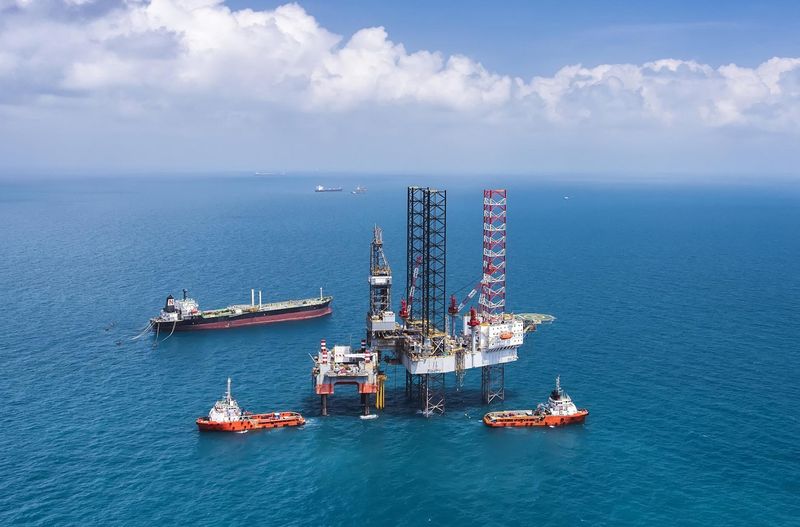
Offshore wind farms require continuous attention long after construction is complete. Turbines, foundations, subsea cables, and associated infrastructure operate in a demanding marine environment, where weather, corrosion, seabed movement, and biological growth can affect performance.
For operators, offshore wind operations and maintenance (O&M) is not simply a matter of responding when equipment fails. It involves identifying potential problems early, planning inspections, and coordinating maintenance activities to maintain availability while controlling operating costs.
Subsea robotics has become an important part of this process, particularly for inspecting underwater assets that are difficult or expensive to access.
Why Offshore Wind Maintenance Is Different
Offshore wind farms are often located far from shore, and access depends on vessel availability, sea conditions, and safe transfer arrangements.
Even a relatively straightforward inspection can require a vessel, trained personnel, specialist equipment, and an appropriate weather window. If an underwater problem is discovered late, operators may need to arrange a separate intervention campaign.
These logistical constraints make preventive maintenance particularly valuable.
The underwater components of an offshore wind farm can include:
- Monopile or jacket foundations
- Inter-array power cables
- Export cables
- Cable protection systems
- Scour protection structures
- Subsea connections and associated equipment
Each asset has different failure mechanisms and inspection requirements. A well-designed O&M program must account for these differences rather than applying one inspection method to every component.
From Reactive Maintenance to Condition-Based Inspection
Traditional maintenance programs may rely on fixed inspection intervals or respond to visible signs of deterioration.
Condition-based maintenance takes a more targeted approach. Inspection findings, operating data, and engineering assessments are used to determine when an asset needs further attention.
Subsea robots support this approach by collecting repeatable visual and sensor data.
For example, an ROV may inspect a cable crossing and document the condition of the protective structure. A later inspection can compare the findings and help engineers determine whether the situation has changed.
Similarly, repeated surveys of a turbine foundation can provide information about corrosion protection, structural condition, and surrounding seabed changes.
The value lies not only in completing the inspection but also in generating information that supports maintenance decisions.
Application 1: Subsea Cable Inspection
Cable faults can be expensive because repairs may require specialist vessels, cable handling equipment, and favorable weather conditions.
Routine subsea cable inspections help operators identify conditions that could increase the likelihood of damage.
An ROV can be used to inspect:
- Cable exposure and free spans
- Cable protection structures
- Crossings with other subsea infrastructure
- Visible external damage
- Changes in the surrounding seabed
Inspection findings can help determine whether further assessment or protective work is necessary.
However, visual inspection has limitations. Burial depth and internal cable condition may require other survey techniques or specialist equipment. An ROV should be considered part of a broader cable integrity program rather than a complete replacement for all testing methods.
Application 2: Foundation and Scour Monitoring
Offshore wind foundations experience continuous interaction with waves, currents, and the seabed.
Scour occurs when flowing water removes sediment around a foundation. If this scour is not properly assessed and managed, significant seabed changes may affect the surrounding support conditions.
ROVs equipped with cameras and suitable sonar systems can help inspect the foundation and monitor changes in the seabed.
These observations can support comparisons between inspection campaigns and help identify areas requiring additional investigation.
The survey method must be selected according to the asset design, water depth, visibility, and required measurement accuracy. Visual observations alone may not provide all the information needed for a structural assessment.
Application 3: Corrosion and Structural Inspection
Steel foundations and subsea structures are exposed to corrosion, marine growth, and mechanical damage.
ROVs can capture images of structural surfaces, connections, and protective systems. The resulting data can help engineers identify visible abnormalities and prioritize follow-up inspections.
For detailed condition assessments, additional instruments may be needed. Depending on the project, these could include specialized measurement tools, sonar, or other nondestructive testing equipment.
The key advantage of remote inspection is that operators can obtain underwater information without requiring divers to perform every observation.
Application 4: Construction and Repair Support
Subsea robotics is also valuable when maintenance requires physical work.
Work-class ROVs can be configured with robotic arms and compatible tools to support certain intervention tasks. Depending on the system, these may include handling objects, operating equipment, or assisting with subsea construction activities.
Dedicated trenchers and cable burial systems serve a different role. They excavate the seabed to install or protect cables and may be used during new construction or corrective maintenance.
Using the appropriate machine for each task can improve operational efficiency. A general-purpose ROV is not necessarily the best tool for every excavation or cable burial requirement.
Selecting the Right Robotic Equipment
Equipment selection should begin with a clear definition of the maintenance task.
For visual inspections, operators should consider camera resolution, lighting, stability, maneuverability, and the ability to maintain a suitable viewing angle.
For work in low-visibility conditions, sonar may provide valuable information where optical cameras have limited effectiveness.
For intervention tasks, payload capacity, tool compatibility, manipulator performance, and available power become more important.
Operating depth must also match the site. The complete system—including sensors, connectors, thrusters, and supporting equipment—must be suitable for the intended pressure environment.
Finally, vessel compatibility and deployment arrangements should be assessed before mobilization. A technically capable robot can still create project delays if its launch and recovery requirements are not compatible with the available vessel.
Improving Maintenance Planning with Inspection Data
Robotic inspection is most valuable when its findings are organized and compared over time.
A useful inspection record should include the asset location, date, operating conditions, relevant imagery, observations, and recommended follow-up actions.
Where appropriate, georeferenced data and repeatable survey routes can make comparisons more meaningful.
Maintenance teams should also establish clear criteria for escalating findings. Minor visual changes may require monitoring, while evidence of cable exposure, structural damage, or deterioration may justify a more detailed engineering assessment.
Integrating inspection results into asset management systems helps avoid treating each offshore campaign as an isolated activity.
Challenges and Limitations
ROVs do not eliminate all offshore maintenance risks.
Their performance can be affected by currents, poor visibility, umbilical management, equipment reliability, and vessel positioning. Operators also need appropriate training to interpret sensor data and control the vehicle safely.
Some maintenance tasks require specialist tooling or direct engineering intervention beyond the capabilities of an observation vehicle.
For this reason, subsea robotics should be integrated into a maintenance strategy that includes survey planning, risk assessment, qualified personnel, and suitable contingency arrangements.
The Future of Offshore Wind O&M
The industry is increasingly exploring automation, AI-assisted inspection, autonomous systems, and remote monitoring.
These technologies may help operators process inspection data more consistently and identify changes that require attention. Autonomous underwater vehicles can also support selected survey tasks, while ROVs remain valuable when real-time operator control or physical intervention is required.
The most practical approach is likely to combine multiple technologies according to the needs of each asset and project.
Conclusion
Offshore wind O&M depends on reliable information, effective planning, and timely intervention. Subsea robotics helps operators inspect underwater assets, document changing conditions, and reduce reliance on personnel entering hazardous underwater environments.
ROVs, work-class intervention systems, and dedicated trenching equipment each contribute to different parts of the maintenance process.
For offshore wind developers and asset owners, selecting appropriate equipment and building a consistent inspection program can improve visibility into asset condition and support more informed maintenance decisions.
VVLAI provides subsea robotic and engineering equipment for underwater inspection, cable operations, and offshore infrastructure support, helping project teams evaluate solutions for their specific operational requirements.
