
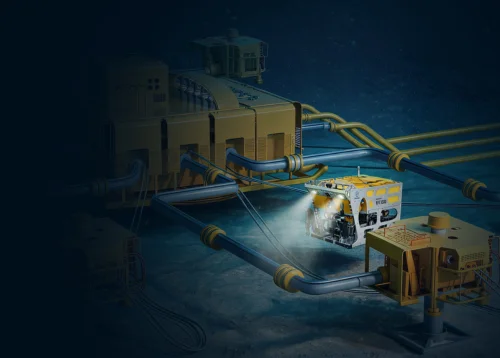
Submarine cables are essential infrastructure for offshore wind farms, telecommunications networks, and offshore energy projects. Once installed on the seabed, these cables must be protected against external impacts, fishing activities, anchor damage, and seabed movement.
Burial is one of the most widely used methods of subsea cable protection. However, burying a cable underwater is not simply a matter of digging a trench. The equipment must operate under changing seabed conditions, maintain the required burial depth, and avoid damaging the cable during the installation process.
Choosing the right subsea cable burial machine is therefore an important decision for offshore contractors and project owners.
Why Subsea Cable Burial Is Necessary
A submarine cable laid directly on the seabed may be exposed to several risks.
Fishing gear can drag across the seabed and come into contact with an unprotected cable. Ship anchors may penetrate the seabed and damage buried or exposed sections. Strong currents and sediment transport can also change the surrounding seabed profile, potentially exposing previously protected cables.
Cable burial reduces these risks by placing the cable beneath the seabed surface.
The required burial depth depends on project-specific factors, including:
- Seabed soil characteristics
- Water depth and hydrodynamic conditions
- Fishing and anchoring activity
- Cable diameter and mechanical properties
- Local regulations and project protection requirements
- Installation method and cable design
A burial machine must be selected according to these conditions rather than relying on a single standard configuration.
Common Types of Subsea Cable Burial Machines
Different seabed conditions require different trenching methods. The main equipment categories include jetting systems, mechanical trenchers, and towed plows.
1. Jetting-Based Cable Burial Machines
Jetting systems use high-pressure water to loosen or fluidize seabed sediment. Once the soil is disturbed, the cable can settle into the resulting trench under controlled conditions.
This method is commonly considered for softer seabed materials such as sand and silt.
Its main advantages include:
- Reduced direct mechanical contact with the cable
- Effective sediment fluidization
- Adaptability to certain soft-soil conditions
- Potential for integration with ROV-based operations
However, jetting performance depends heavily on soil composition, water pressure, flow rate, and nozzle configuration. Hard or compacted seabed conditions may require additional mechanical assistance.
2. Mechanical Subsea Trenchers
Mechanical trenchers use cutting chains, wheels, or other mechanical tools to excavate the seabed.
They are suitable for projects where the soil is too compact or resistant for conventional jetting alone. Chain-based trenchers can provide controlled excavation while maintaining a defined trench profile.
Mechanical systems are often considered for challenging seabed conditions, including compacted sediments and certain harder formations.
Their selection requires careful evaluation of cutting power, traction, excavation efficiency, and soil characteristics.
3. Towed Cable Burial Plows
A towed cable burial plow is pulled by a support vessel. As it moves along the cable route, its plowshare penetrates the seabed and creates a trench.
This equipment is generally used for cable installation projects with suitable seabed conditions and vessel arrangements.
Compared with self-propelled subsea trenchers, a towed plow relies on the vessel for movement and towing force. Its performance therefore depends on vessel capability, seabed resistance, and operational conditions.
Key Factors in Selecting a Subsea Cable Burial Machine
A machine that performs well in one offshore project may not be suitable for another. Before selecting equipment, contractors should evaluate several technical factors.
1. Seabed Conditions
Seabed geology is one of the most important considerations.
Soft sand and silt may be suitable for jetting systems, while compacted clay or weathered rock may require mechanical excavation. Mixed seabed conditions can be particularly challenging because soil resistance may change along the cable route.
A geotechnical survey helps determine the appropriate trenching method.
2. Required Burial Depth
The burial machine must achieve the target depth under actual operating conditions.
For example, some projects may require relatively shallow burial, while others demand deeper trenches because of anchoring risks or specific engineering requirements.
Contractors should distinguish between the machine’s maximum trenching capability and the depth it can consistently achieve in a particular soil type.
3. Cable Diameter and Protection Requirements
Cable diameter affects trench width, tooling clearance, and cable handling arrangements.
The machine should provide sufficient space for cable passage without creating unnecessary mechanical stress. Cable bending radius, pulling force, and protection accessories must also be considered.
4. Operating Water Depth
The equipment’s rated working depth must meet the project’s requirements.
A machine designed for shallow-water operations may not be suitable for deepwater projects. Contractors should also evaluate the depth ratings of connected hydraulic systems, cameras, sensors, and other underwater components.
5. Mobility and Positioning
A subsea cable burial machine must maintain stable movement along the planned route.
Crawler tracks, skid systems, and towed configurations offer different advantages. Tracked vehicles may provide better mobility in certain seabed environments, while towed systems can be suitable for routes where vessel-based operation is practical.
6. Power and Excavation Capacity
Mechanical trenching systems require sufficient power to overcome seabed resistance. Jetting systems depend on pump capacity, operating pressure, and water flow.
A higher power rating does not automatically mean better performance. The complete system must be matched to the soil, target trench dimensions, and operational speed.
Mechanical Trenching vs. Jetting: Which Is Better?
There is no universal answer.
Jetting is often a practical option for soft and easily fluidized sediments. It can reduce direct mechanical interaction with the cable and may support efficient burial in suitable conditions.
Mechanical trenching offers more direct excavation capability when the seabed is compact or difficult to fluidize. However, it requires sufficient cutting power and careful management of mechanical loads.
Some offshore projects benefit from combining different trenching methods along the same cable route. The final selection should be based on seabed survey results, engineering requirements, and project economics.
VVLAI Subsea Cable Burial Equipment
VVLAI develops subsea trenching equipment for submarine cable and pipeline burial applications.
Its equipment portfolio includes different configurations for varying operational requirements.
The VKG1100 chain trenching ROV is designed for subsea excavation, with a trenching depth of up to 3 m and a working depth rating of 1,000 msw. Its mechanical trenching system is intended for challenging seabed conditions where controlled excavation is required.
For projects involving different trenching methods, VVLAI also offers equipment such as the VYL series subsea trenchers and the VCP60 towed trenching plow. These systems provide different operating configurations and trenching capabilities for project-specific applications.
The appropriate model depends on the required burial depth, cable dimensions, seabed conditions, water depth, and installation method.
Final Considerations Before Equipment Deployment
Before mobilizing a subsea cable burial machine, project teams should confirm several details:
1.Complete the seabed survey and identify soil variations.
2.Confirm the cable route and target burial depth.
3.Evaluate the required trench width and cable clearance.
4.Match the machine’s power and tooling to the seabed.
5.Check vessel compatibility and launch-and-recovery arrangements.
6.Establish monitoring procedures for burial depth and equipment performance.
Proper preparation can reduce unnecessary excavation, equipment downtime, and cable installation risks.
Subsea cable burial is a specialized engineering operation that requires close coordination between survey teams, installation contractors, vessel operators, and equipment manufacturers. Selecting the right burial machine is an important step toward protecting submarine cables and ensuring reliable offshore infrastructure.
